
International Climate Justice
Upholding Our Rights
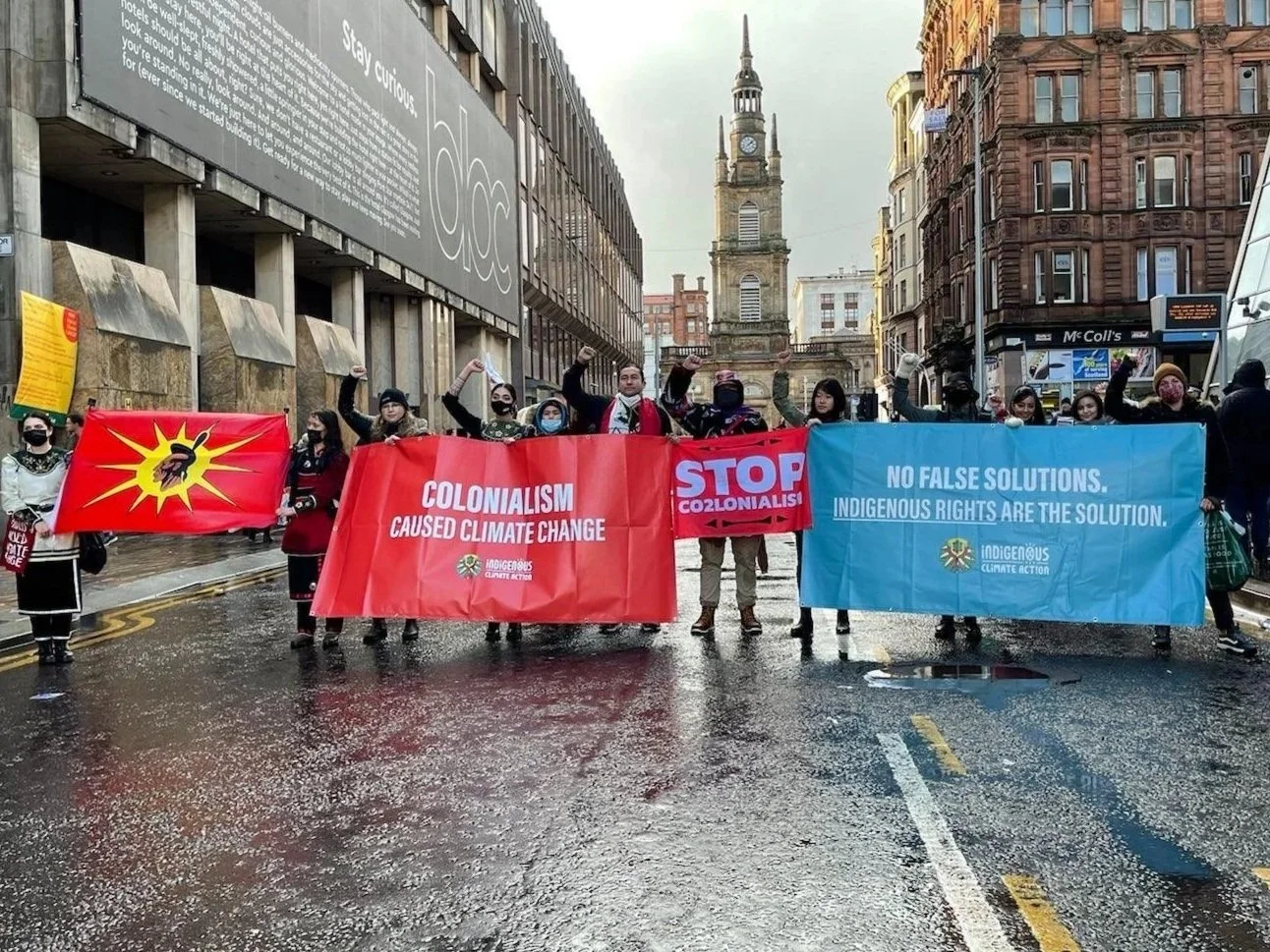
We have a responsibility to stay involved, informed and active in international spaces where global colonial leaders are negotiating plans and actions that directly impact our rights.
International spaces have historically treated Indigenous peoples as stakeholders with no more rights than environmental non-governmental organizations (ENGO) despite decades of legal challenges and UN declarations that support otherwise.
Au cours des trois dernières décennies, les peuples autochtones ont fait progresser certaines des politiques climatiques les plus solides, ancrées dans nos droits, notre langue, notre culture et nos identités, approfondissant ainsi une appréciation collective du droit naturel et de l'importance des systèmes naturels vivants en tant qu'éléments essentiels à la survie sur cette planète.

Woven
Woven is a global initiative fighting for climate stability through Indigenous solutions. Believing the protection of our planet is dependent on the protection and advancement of Indigenous rights and sovereignty, Woven supports projects on land defense, conservation, and climate campaigns.
UNFCCC United Nations Framework Convention on Climate Change
The United Nations Framework Convention on Climate Change (UNFCCC) is an international agreement by 198 nation-states to address climate change. It was signed at the Earth Summit in Rio de Janeiro in 1992 and came into force in 1994. The following year, the United Nations began hosting a yearly climate conference to act as the formal meeting of the UNFCCC Parties (nation-states) which came to be known as the Conference of the Parties (COP).
-
![]()
COP30
Belém, Brazil
November 10-21, 2025 -
![]()
COP29
Baku, Azerbaijan
November 11-22, 2024 -
![]()
COP28
Dubai, United Arab Emerites
Nov 30-Dec 12, 2023 -
![]()
COP27
Sharm El Sheikh, Egypt
November 6-18, 2022 -
![]()
COP26
Glasgow, Scotland
Oct 31 - Nov 12, 2021 -
![]()
COP25
Madrid, Spain
December 2-13, 2019

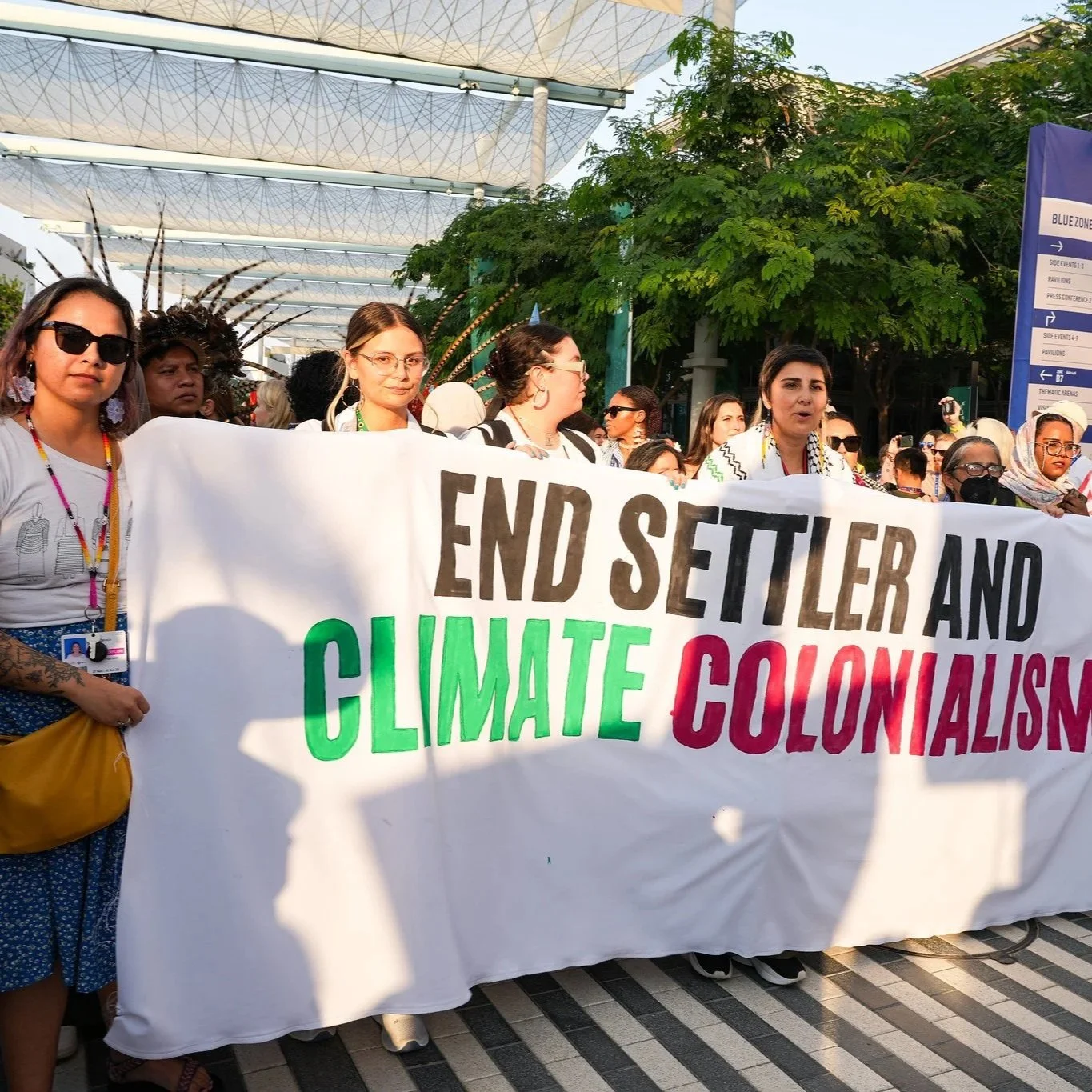
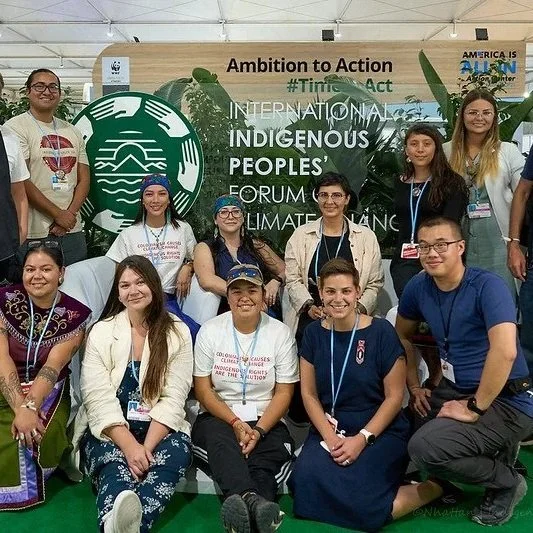
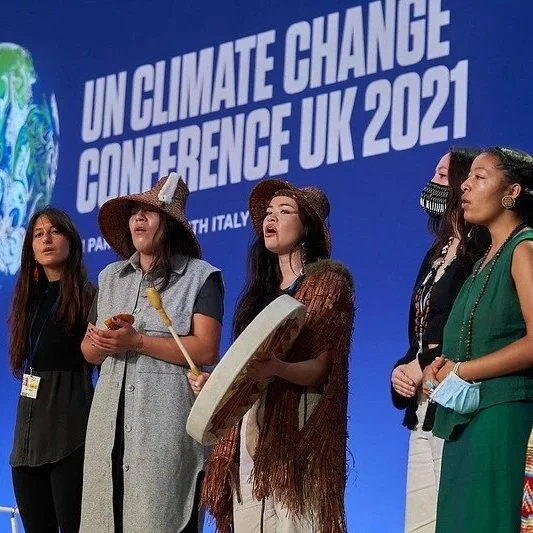
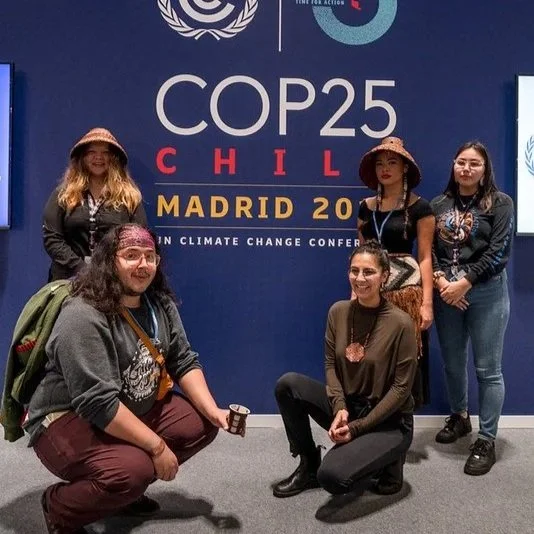
"Les peuples autochtones ont été parmi les plus formidables défenseurs du changement climatique en tant que question politique mondiale. Nous avons réclamé les objectifs, les stratégies d'atténuation et d'adaptation les plus progressistes au monde et nos communautés réagissent à la crise climatique en s'inspirant de nos systèmes de connaissances traditionnels et en fusionnant les technologies coloniales pour créer des solutions durables et contrôlées localement en matière d'énergie, d'alimentation et d'économie climatique.
